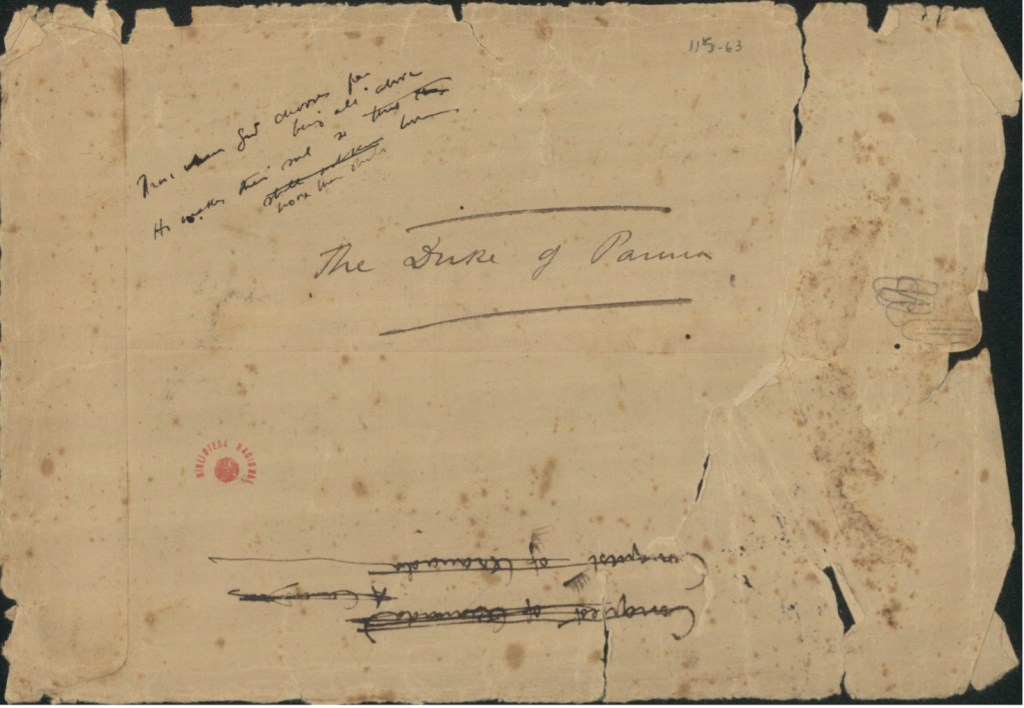
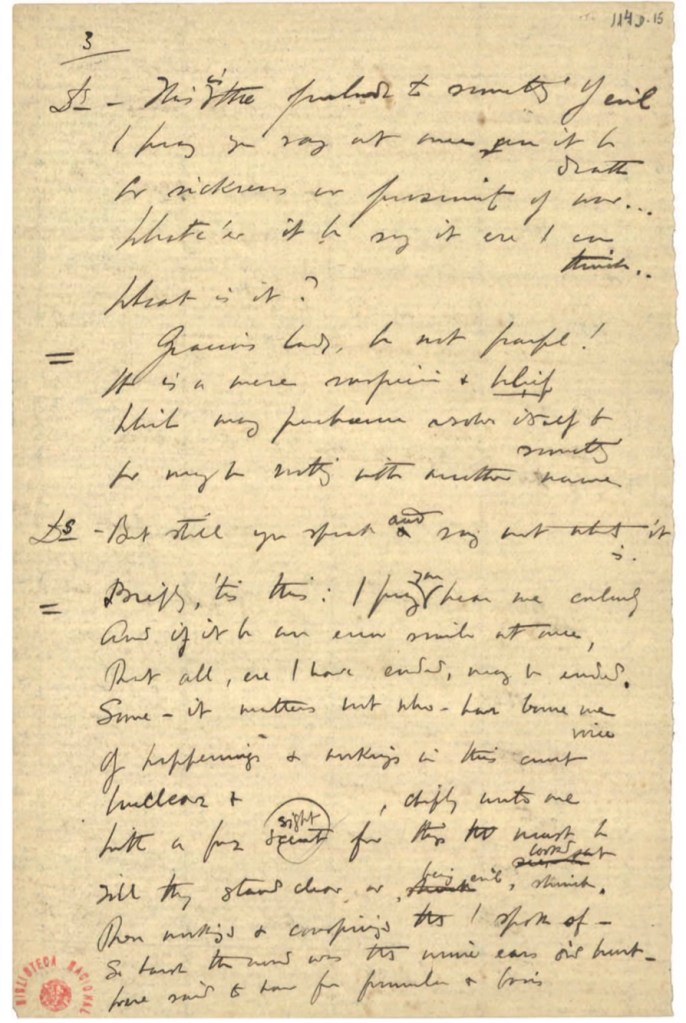
It was around 1909, according to biographer Richard Zenith, that Pessoa wrote the first pages of passages and scribbled fragmented notes for his five-act play, “The Duke of Parma: A tragedy.” Which, if it sounds rather Shakespearean, was supposed to be just that. According to Zenith: “It is one of the largest and weirdest of the many plays Pessoa tried to write. If its title sounds like it belongs to a play Shakespeare could have written, it is because the author was aiming for precisely that.” (Zenith: 2021). Zenith then goes on to show us a glimpse of the play which, at first, I read with keen interest, albeit with little felt effect. However, the passage, as it seems to be the habit with much of Pessoa’s writings, kept haunting me. I dare say: stalking me. I have since, naturally, looked and looked for this play which has become a mild obsession for me. Unfortunately, the play is still under scrutiny by researchers who are deciphering and transcribing the many fragmented pages—even piecing together whole scenes as best as possible. Here are a few photos highlighting what the scholars are working with:
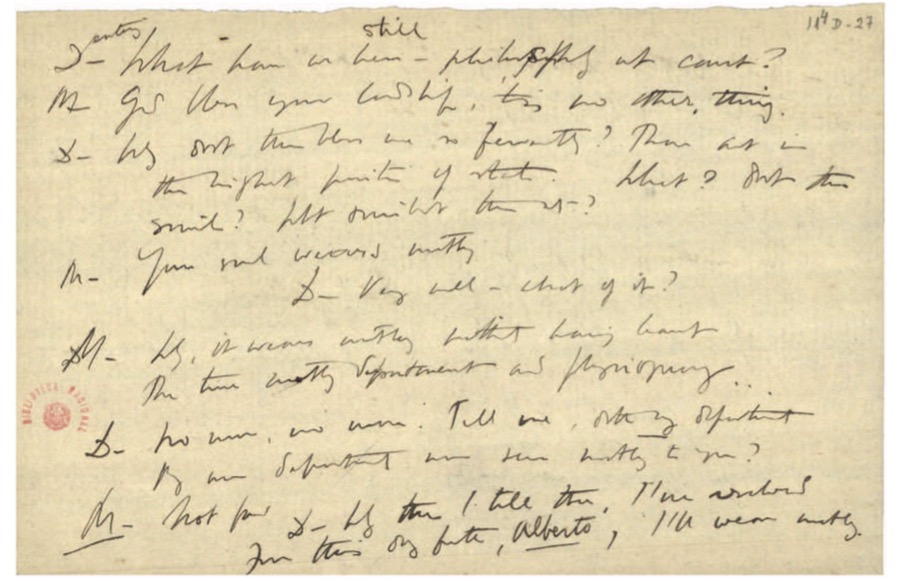
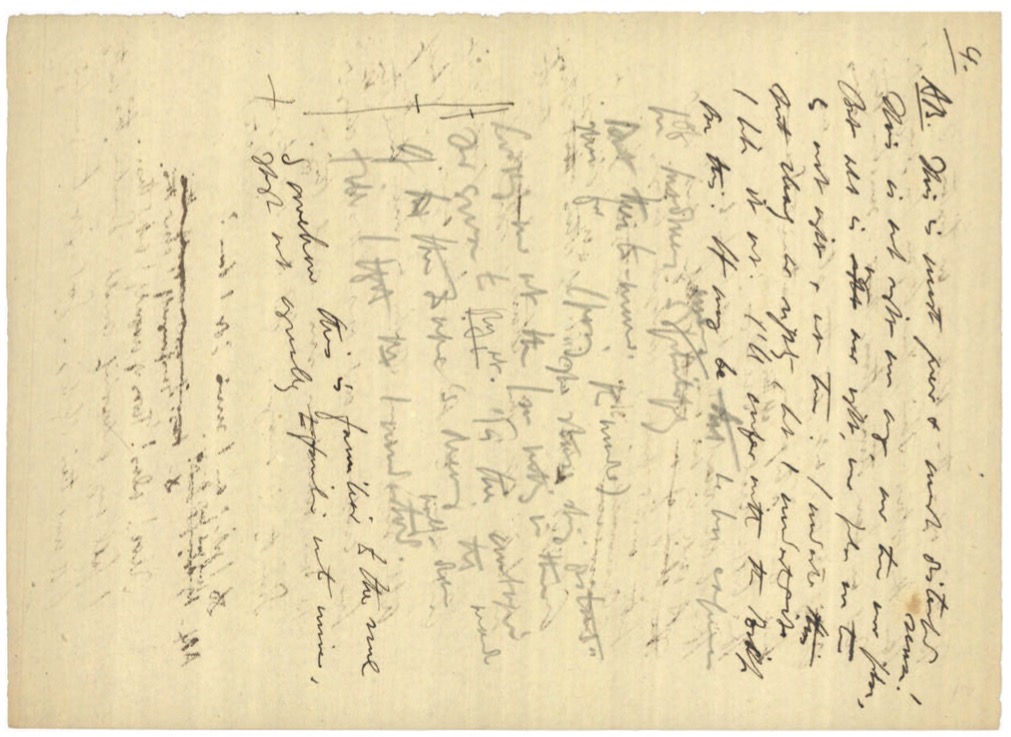
(More photos will be added at the end of the issue.)
Below are fragments of the play, more or less pieced together—which, as it one can guess, took quite a bit of effort:
Fragment A — folio Xr (opening scene, diplomatic) [Stage directions: A great hall in the ducal palace of Parma. A throne. Torches. Night.]
DUKE: (alone) I have become a land whose name the sea remembers not. CHAMBERLAIN: (entering) My Lord—
DUKE: Speak. Let what you bring be truth or shadow; both serve. CHAMBERLAIN: The envoy from Milan waits. He bears urgency under a frank face.
DUKE: Send him. If Milan comes with words, my silence will answer with things.
Fragment B — folio Xv (Duchess & confidante, diplomatic)
DUCHESS: They say his hands are steady because his mind fears no damnation.
CONFIDANTE: Fear, my lady, is a small god men worship who would be brave.
DUCHESS: Then we must build a chapel for small gods, for the great gods have fled our house.
Fragment C — folio Yr (political debate, diplomatic)
GENERAL: We must either make the people love us or make them afraid enough to stop thinking.
PRIEST: Better to teach them to think of God; thought of God keeps them obedient and hopeful.
GENERAL: Godless thought is like stormwater—useful when harnessed, destructive when let loose.
Fragment D — folio Yv (Rinaldo soliloquy, diplomatic, abridged) RINALDO: If a man measures himself by the measure of his time, will he not be always short? I would rather be a man out of measure, than a man within measure who shrinks at noon. The world counts by the hour; I count by the silence between hours.
Fragment E — folio Zr (closing fragment, diplomatic) [Music offstage. A candle guttering.]
DUKE: (to the darkness) Come, then, what is to come; I have already been it. [Scene cuts; manuscript breaks]
Other fragments (from Zenith):
- Fragment 1—DUKE: “every face is ugly / And every soul studied closely has some madness”
- Fragment 2—DUKE: “which is dirtier: the conception of a man or his birth.” — DUKE: “Which is the viler: a virgin or a whore?”
Doctor replies that a whore is viler.
DUKE: There art thou mistaken, for one lies with men, and the other with her imagination, which is as if she lay with a monster.” - Fragment 3—DUKE: “All’s dirty in the world—all, all!”
- Zenith tells us: “Though he [Duke] know the accusation is false, he at one point calls his wife a whore, grabs her by the throat, and hurls her over the parapet, watching her fall to her death with ‘insane delight.’”
Apparently Pessoa wrote the following note after one of the Duke’s speeches:
- “The Duke’s constant sexual allusions and their purpose. They are not the author’s; they belong to the author’s conception of the character of the Duke.” (Zenith: 2021).
Later, Pessoa wrote, apparently meant to be part for a preface he never wrote to The Duke of Parma:
- “I have never shown what I am.” (Zenith 2021).
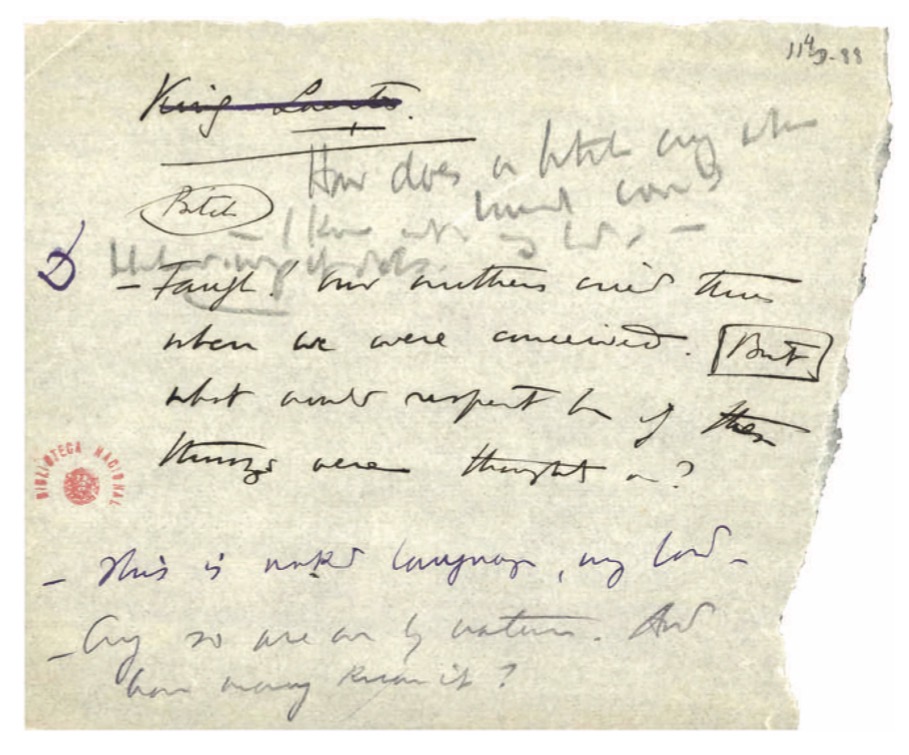
To any familiar with Shakespeare’s plays, these fragments are both linguistically (consider the Elizabethan-era English: ‘doth’, ‘wilt’, etc.) similar to Shakespeare, and thematically too. The Duke is an obvious interpretation of a mad Lear-like or even Macbeth-like character, and the killing of his own wife, though done out of an entirely different motive (or so it appears from what we have), echoes the shocking ending of Othello. The “insane delight” could also be seen in the light of Macbeth’s incredible indifference to his wife’s death at the end of Macbeth—a Pessoan spin.
Imagistically, these lines,
RINALDO: If a man measures himself by the measure of his time, will he not be always short? I would rather be a man out of measure, than a man within measure who shrinks at noon. The world counts by the hour; I count by the silence between hours.
easily echoes much of Shakespeare’s intrinsic tragicomic tendencies—the first sentence is both hilarious and puts the Heideggerian being-towards-death into great perspective. The middle sentence echoes the first, whereas the last sentence is a deep, beautifully written aphoristic assertion.
Another example,
DUKE: Speak. Let what you bring be truth or shadow; both serve. CHAMBERLAIN: The envoy from Milan waits. He bears urgency under a frank face.
could very well have been taken out of one of Shakespeare’s major four tragedies—Othello, Hamlet, Macbeth—but The Tragedy of King Lear especially comes to mind. From the few fragments available to us, and considering how steeped I have been in King Lear for years, I cannot help but see the ageing king and the “intense, impetuous, psychologically unstable, and philosophically restless” (Zenith: 2021) Duke as created in the image of Lear—and a conclusion one will most likely come to if one reads Zenith’s magnificent 1,000-page mammoth biography on Pessoa is that the Duke is created, at least to an extent, in the image of Pessoa too.
It looks, on the whole, like a fascinating play. For an obsessed Pessoa reader such as myself—thanks to Prof. Harold Bloom for bringing him to attention—I cannot wait for the entire play to be reconstructed. I do have my “doubts”, as it were, as to why the play and the fragments, have not yet been released, but let us save those scruples for now.

 Paradiso
Leave a comment