
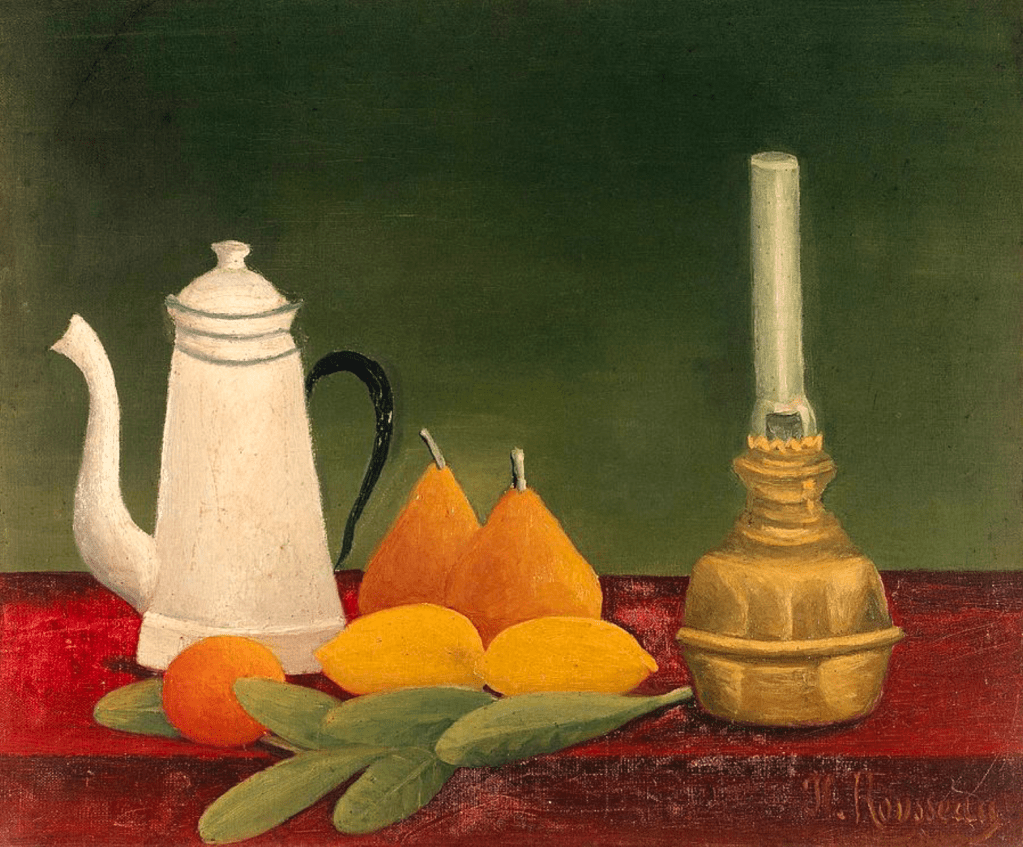
Here’s an excerpt from one of my most treasured poets, Philip Levine, and his exuberant “The Simple Truth” written in 1994, for which he won in 1995 the Pulitzer Prize in Poetry. Like other modern poets such as Wallace Stevens, Robert Lowell, Elizabeth Bishop, Randall Jarrell, James Schuyler, among others, Levine is included in Harold Bloom’s The Western Canon (on which I have written extensively), and he (Levine) is part of an elite “pack”, as it was, of luminous 20th-century poets with whom any serious reader must wrestle, and read, and reread. In the words of Harold Bloom: “Poetic strength comes only from a triumphant wrestling with the greatest of the dead, and from an even more triumphant solipsism.” This, of course, very much applies to the strong reader as well.
In part II, Levine writes arguably one of his best poems in Dreaming In Swedish:
“The snow is falling on the tall pale reeds
near the seashore, and even though in places
the sky is heavy and dark, a pale sun
peeps through casting its yellow light
across the face of the waves coming in.
Someone has left a bicycle leaning
against the trunk of a sapling and gone
into the woods. The tracks of a man
disappear among the heavy pines and oaks,
a large-footed, slow man dragging
his right foot at an odd angle
as he makes for the one white cottage
that sends its plume of smoke skyward.
He must be the mailman. A canvas bag,
half-closed, sits upright in a wooden box
over the front wheel. The discrete
crystals of snow seep in one at a time
blurring the address of a single letter,
the one I wrote in California and mailed
though I knew it would never arrive on time.
What does this seashore near Malmö
have to do with us, and the white cottage
sealed up against the wind, and the snow
coming down all day without purpose
or need? There is our canvas sack of answers,
if only we could fit the letters to each other.”
I have in previous issues dissected poems from poets such as Dickinson (see the most recent in From Blank to Blank—), Walt Whitman’s Song Of Myself, Robert Lowell’s NO HEARING 3, among others. But in this issue, I intend to let Levine’s poem rather speak for itself; indeed one certainly can find a metalepsis hidden in this poem, a range of metaphoric references, I dare say allusive, elaborate elements in which the poem moves between its counterparts (the other poems in “The Simple Truth”); Levine even plays an intimate, lovely cadence throughout the poem that, when read aloud, is of an almost musical character. (Yes, I’m of the old-school mentality, though not old [I’m stealing from Dickens’s Bleak House]; that a poem that has not been read aloud has not been read at all).
The above mentioned elements can be sufficiently necessary to dissect, for some, let’s call them “analytic” readers (ex.: Paul de Man’s Überleser); but for another sub-group, still very much considered a group of excellent, deep, serious readers, there is a certain elegance — at first, at least, later one is forced to an even deeper reading — in simply letting the Poem (that is to say any poem) speak for itself. Which, while sounding rather lame, much so in these troubled illiterate times, for some, even impotent; yet, I find it a (pun intended) potent way for the reader “to find his own original relation to truth.” (Harold Bloom: A Map Of Misreading 1975).
There is a very simple solution to letting a poem speak for itself, a solution I have inherited from Harold Bloom, but endorsed by other critics such as Samuel Johnson, Kermode, Paul de Man (and any immortal poet within our tradition, really). Read the poem aloud, and read it so often, and so deeply, that, in the end, you have it memorized. Owning a poem, truly, comes through memorization. This is one of the key ways in which you honour the poem, and as it happens, enter into a dialogue with the text itself.
If memorizing the poem feels like a mammoth-like task (and it can be), then consider reading it as you would watch a challenging painting; or, listen to a piece of difficult music. Certainly, in Levine’s poem, there is an abundance of linguistic twists and turns, wherein the reader can awaken, or stimulate, as it was, one’s aesthetic faculties.
From there, you can chart its territories and scrutinize it dialectically, and remind the poet of his/her inheritance, or look deeply at the Ferenczsian catastrophes, or take the final step, the most important and vital, which is re-aiming. Bloom has wonderfully put it as such:
“In the dialectical terms that I will employ for interpreting poems in this book [A Map Of Misreading], re-seeing is a limitation, re-estimating is a substitution, and re-aming is a representation.” (Harold Bloom: A Map Of Misreading 1975).

 Paradiso
Leave a comment