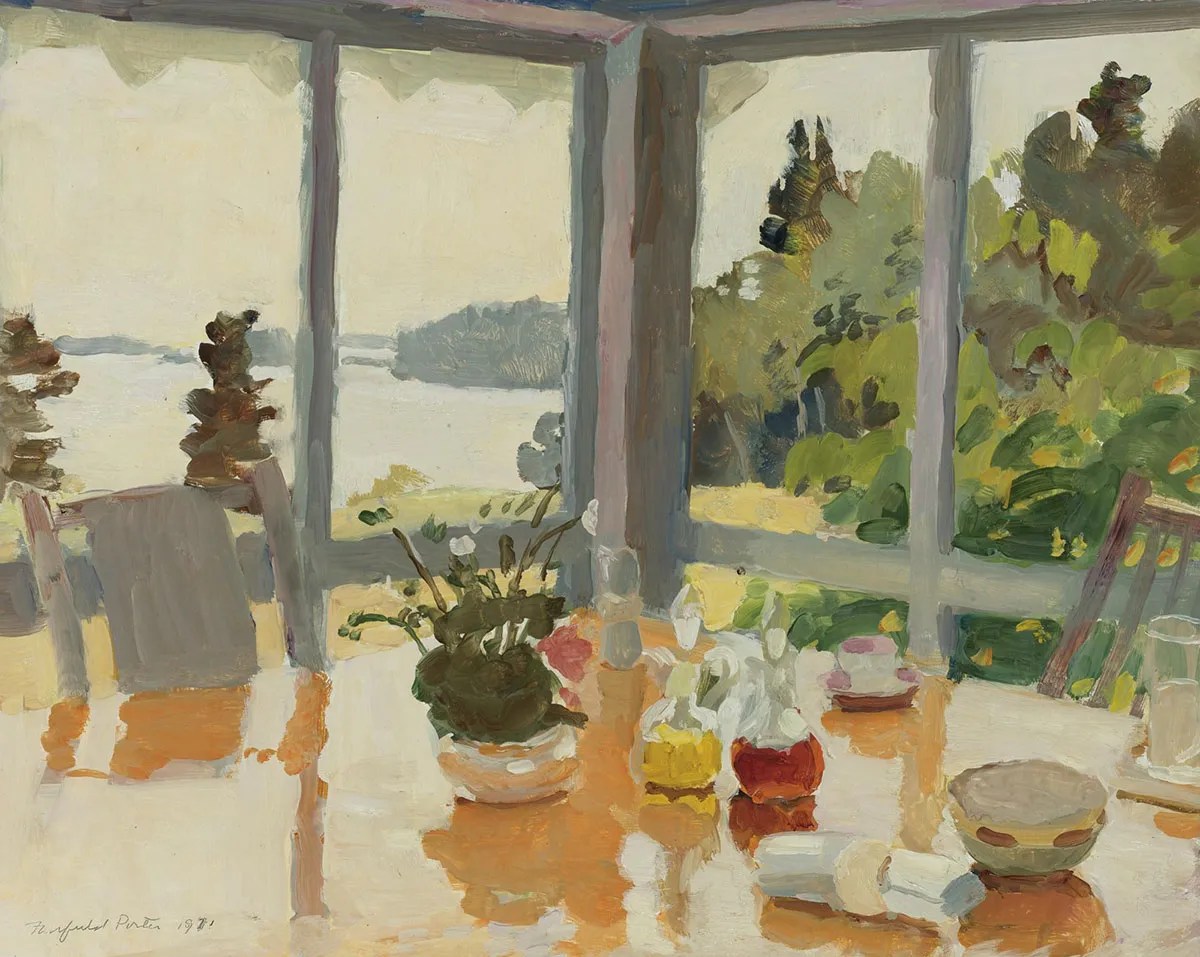

It was around two years ago; I am sorry to confess I don’t remember the exact date (sometime in mid-July), when I, along with my mentor Michel De Montaigne, went for a contemplative walk in a small village some ten kilometres outside Bergerac. The village, which could be said to be more of a hamlet (or a “Hameaux”), had a fruity and sweet smell to it, stemming — or so Montaigne told me — from the many apple orchards, of which there were plenty, and of which, as it happened, the hamlet made its small, but comparatively prosperous living.
It was a very fine place; few places of its size, at least from what I had seen, and even back then I had seen quite a bit, were more complete, more ripe for exploration. It was truly, like Montaigne jocosely said, a small capital of comfortability, optimism, good living, and, reasonable for any a man seeking the meditation necessary to: “withdraw from such attributes of the mob as are within us” (Montaigne: Solitude). I certainly could feel what he meant as we strolled through the clear cobbled alleyways that sunny July day; I, in particular, who had sought out my mentor and friend from having, and I do not admit to this easily, felt for a while a bit overtaxed, stressed, along with an inexplicable spleen to which he, Montaigne, said nothing would be better than to visit this little hameaux.
A creek sloshed between the houses, reflecting the yellowish light which came slanting down from a very blue sky. Montaigne told me that there were times, during the early Autumn months especially, when the creek would overflow and the local residents would bring out enormous brown-coloured sacks of sand, with which they would build a peculiar wall to stave off the water. This wall, or so went the tale, was so impressive that many residents from Saint-Émilion and Bergerac would — having been told of the event through a splendid network of pigeon post — visit the hameaux to see the phenomenon for themselves (I do apologize; it had such an unusual French name, the wall that is, but I no longer remember it!).
And, as it happened, these visitors would, while beholding this splendid ‘wall of walls’ drink prodigious quantities of the local strong apple cider and eat “Tarte aux Pomme”. It was said, according to folklore, that during the weeks of the creek overflowing, the local resident’s pockets would, after all was said and done, swell with their plenty!
Montaigne told me, earnestly, sincerely, as we crossed the little square, which was the centre (such centre as it was) that the stones on which we trod were, as most of the valiant French stones, which paved the Gallic cities from north to south, steeped in bloody and much troubled history. From German occupations to local revolutions, from suicides to grandiosity of thought, from the poetic to the political. This place especially, he said, as we stood in the very midst of the square, was saturated with ghosts from a past he often vividly dreamt of.
Interestingly, Montaigne relayed this information to me with a touch of what I thought was either sadness or melancholy, to which I sensed that he too possibly was submerged in a mild state of spleen. I did not word my suspicions, perhaps I should have, but retrospectively I think I was a little bit subdued, perhaps afraid; with him being my mentor, and only recently had we “transitioned” if you will, into a blooming friendship, which, however, was still rather new and still in its infancy. In any case, I let him talk, of the place’s history and intricacies and folklore. It seemed to do him good to talk.
And, it was very soothing listening to Montaigne. He always opened my eyes into a world in which he saw things (reflectively, self-consciously) that was of such nuance and of such profound exuberance that I was reminded of a Shakespearean or Moliérean scene; where he, Montaigne, was both the writer, director and main actor of the play.
There was one small restaurant, if one could even call it that: a dark, dusky, wooden house, where, upon conversing a bit with the owner, a rather fat, pock-marked lady with whom Montaigne had made acquaintance before, we were served salted meat, bread, radishes and a bowl of fruit. We also drank — in moderation of course — a bit of red wine and discussed of all things Rabelais. The food was lovely, and the fat proprietor who had served a delicious raisin-cake for dessert, turned out to be equally lovely, agreeable, hospitable. Contributing with many stories and anecdotes as she had lived in that area (in that very house in fact) her entire life.
For my own part, I felt as the day progressed warmly and comfortably my spleen lift, as Montaigne had promised, while he himself, oddly, seemed still to be trapped or stuck in something which I after lunch concluded had after all not the “typical” characteristics of melancholy, but rather was a sort of irritation. One may say of my friend that half of him seemed quite at ease and half was in a state of strange vexation. Never did he hint at, or comment on it, but it was a felt thing. Even, I guessed, the proprietor, who was not of much sensibility but of a plain practical mind, had sensed something in her old, thoughtful guest.
To reach the single, but handsome church tower from the small restaurant where we had eaten, one had to follow the creek, which continued in the direction of a green, high-grassed hill (or “côteau”); we passed several stone houses bosomed in sprawling gardens, vineyards, scattered villas, a ruinous, sullen-looking building overgrown with emerald moss, which was thought to have been a military outpost once, and of course, apple orchards.
After you turned your back to the hamlet you walked for a while before you reached the church. It was all very green and there was the drowsy hum of mid-summer. Then came the church tower: a charming, dove-coloured building made up of fresh pale stone on which the sun danced and on whose surface rosebushes grew in abundance in the cracks. It presented such a strikingly harmonious sight that upon scaling the sandy road I thought, to myself: this place is as complete as my friend accompanying me.
Montaigne told me as we entered through a wrought-iron gate the vast church-grounds that he knew many grander constructions than this, but fewer were more agreeable to him. He said that at evenfall all the lanterns, which I had seen from afar hang on tall wooden poles around the base of the church, would light up, and around which, during the warm cloudless nights, bugs would swirl around noiselessly; while the light would give to everything a lovely, divine-like implication.
Upon closer inspection I saw the church had its wear and tear, something, of course, that was to be expected, and, something that only provided it with more character. Montaigne, I noticed, as I myself was examining the church, was looking at me, as I examined the place. I asked him what he was thinking (a little nervously) and he told me, in a tone I would later come to think of as apologetic, that he had not been quote: “his full self” that day.
Then he sat down, heavily, tired, on a slab of grey stone. Above him rose an angel in white but stained marble, its shadow was very dark on the spot where my friend sat; leaning, ever so slightly, over his feet. He made a fine and curious figure. Then he begged me to come and sit. A narrow lane led on our right to the graveyard, on our left the cobbled road to the church. Ahead were far-projecting oak trees, and a sunny garden where there sat two priests on a bench (much like we sat: one older, one younger) talking animatedly. I could just make out the little outhouse where the sacristan lived, an old, much dilapidated wooden building, but I found it charming, appealing, as if the faded wooden logs somehow radiated an inward trust, like that of someone good-natured whom you could rely on.
Montaigne said nothing for some time. Fruit-trees rustled around us and scented the nearby area. Then he leaned back and studied the landscape as a painter might study his motive before taking to the canvas with brush and colour.
“I think,” he said, “it might have to do with old age.”
“I assume you are referring to your feeling,” I hesitated a bit, “the blues?“
He nodded. “How baboon-ish you put it,” he said, smiling, “but in a sense, yes.”
“Old age,” I repeated.
He still smiled.
Written by Oliver Marcell Bjerregaard.
For the full story: find the contact information on the home page.

 Paradiso
Leave a comment