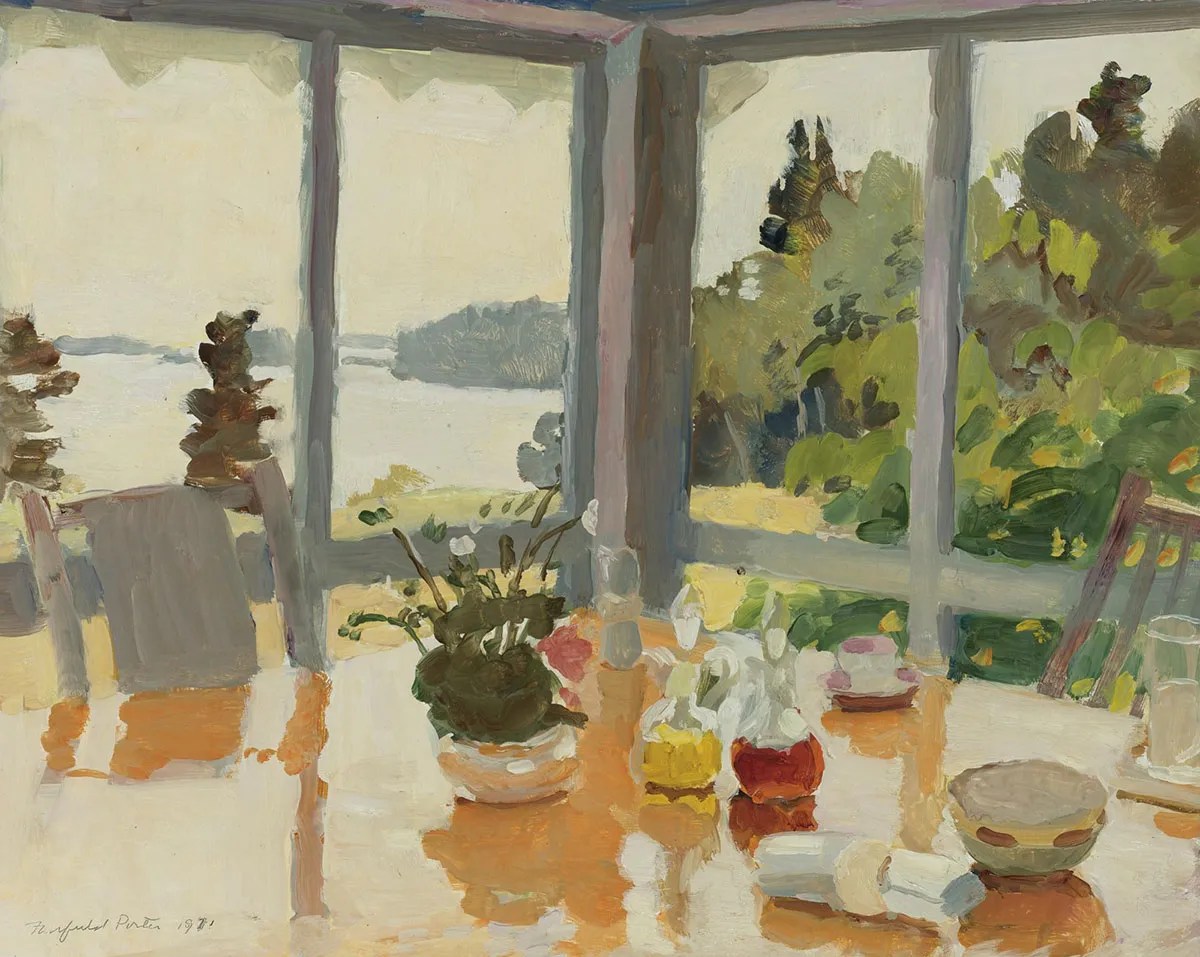
This summer I have spent in a rather mixed topography, from the picturesque, desolate, sunlit, arid deserts, to the watery, mountainous, wooded landscape; from Texas to Copenhagen, from Vienna to Sweden — from Austin’s sprawling music scene to Enchanted Rock’s stone-spotted hills; to a red-coloured, two-storey cabin in the midst of the quiet, Swedish woods; to Austria’s snow-capped mountains from which the sky showed itself a blue so intense that much of everything else seemed a mere forgery.
Such travels are of course extremely beneficial to reading. Hence, I had prepared well, and brought with me a variety of especially poets, most of whom, however, to my great surprise, fell rather short, considering the environmental variety of my travels. Wordsworth, while being one of the greatest poets I have read (and I have reread him for many years) did not quite suit the wild temperament of Texas. Neruda’s Canto General, while I have stumbled my way through it twice, seemed to me strangely in conflict with the quiet woods of Sweden. Dickinson, of whom I have read possibly more than any other poet created much excitement in the shingled-green Swedish solitude, but she felt rather out of place, somehow, in the very northern European city of Copenhagen. So I was left therefore with a significant pile of Henry James’s novels and short stories, of which I devoured entirely (a post will follow on James, as reading him has been for me like what Immanuel Kant must have felt, when he came up with the Copernican turn) — and, as it happened, I was in possession of a collection of Wallace Stevens’s poetry.
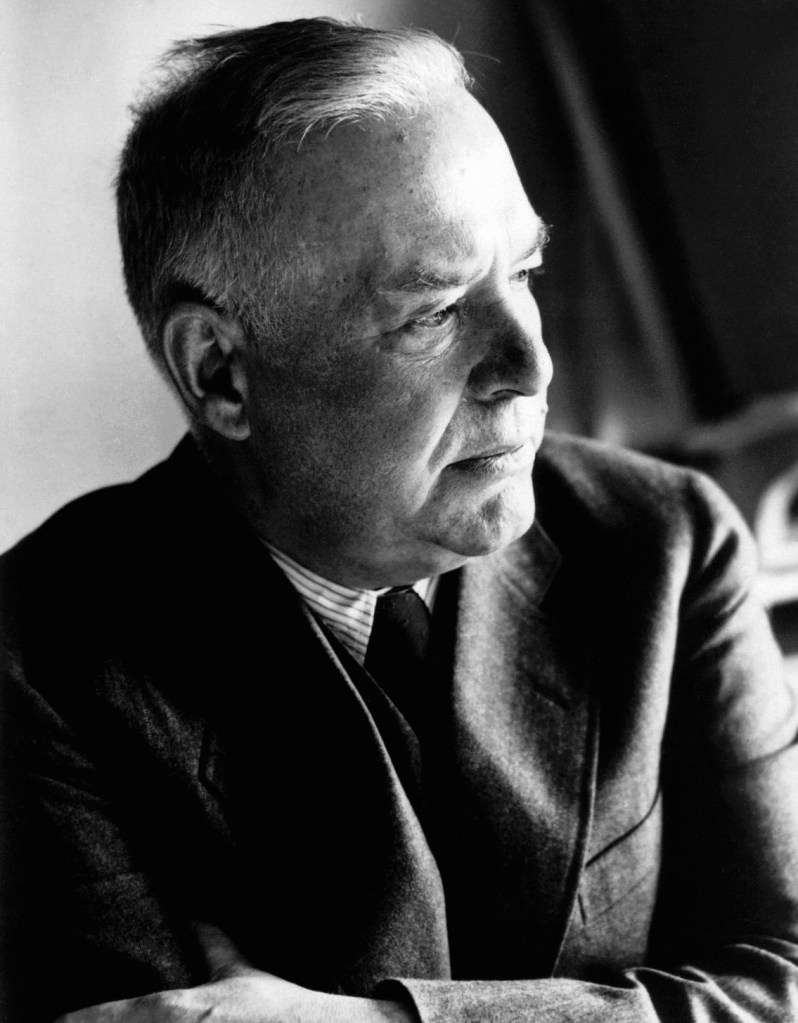
It turned out Stevens was just what I needed. I had been captivated by Stevens before, especially reading prof. Harold Bloom’s and Elizabeth Bishop’s thoughts on his work. So I decided, decidedly and definitely, that I had to study him. Thus, with my hardback Library of America edition of Stevens’s ‘Collected Poetry & Prose‘ in my metaphorical back-pocket, I allowed myself to sink deeper and deeper into his work, which blended so well with the asymmetry of my geographical movings. Stevens, whose poetry is just that: a most well-refined, beautiful, strange, and stunning exploration of quote: “the real” and “the imaginary.”
It certainly did not come about easily, reading Stevens’s strange and beautiful work that is, even for someone who has read poetry for years and years. He represents many fantastic challenges, and his work requires much re-reading, much reflection, and much introspection. Anything less than your full attention will lead you no further than to the gate.
From quite “simple” (yet charmingly and complex) one-line poems such as The Snow Man,
One must have a mind of winter
To regard the frost and the boughs
Of the pine-trees crusted with snow;
And have been cold a long time
To behold the junipers shagged with ice,
The spruces rough in the distant glitter
Of the January sun; and not to think
Of any misery in the sound of the wind,
In the sound of a few leaves,
Which is the sound of the land
Full of the same wind
That is blowing in the same bare place
For the listener, who listens in the snow,
And, nothing himself, beholds
Nothing that is not there and the nothing that is
to extraordinarily vivid, and darker poems like The Owl In The Sarcophagus, or his longer “epics” such as Extracts From Addresses. Stevens proves time and again that he can write it all. He seems, and uncannily so, to penetrate levels of such nuance, of such grand intensity that I was often left awestruck, baffled, giddy. Yes, just thinking of certain poems now, as I am writing this, in the peculiar mustard-glow of my kerosene lamp, I feel a sensation of utter giddiness; as if I must return to Stevens — immediately.
My essays on this blog are more often than not — or so I have been told by my little handful of readers — rather long. So, I will keep this issue short, concise, and simply proclaim Wallace Stevens to be an extraordinary, sublime, and exuberant read. Even his unpublished prose, his essays on philosophy and poetry, his literary criticism, his journals and letters, are all in all phenomenal discourses. Stevens will, truly, like the best of our poets, change the reader’s self-perception.
I remember especially the “Falun”-red cabin in which I stayed with my partner, far removed from any cities, towns, hamlets. We were alone in the deeper and isolated parts of the Swedish woods, among the light humming of insects and the trodding of faraway deer; so quiet and still was it, and such a perfect place to rest with Stevens’s poetry, resounding and echoing silkily in my thoughts from sunrise to sundown.
It seemed to me especially, during the still, bright mornings, of which there were plenty, that Stevens truly was heard. And I felt so alive under the flicker of gold, under the pine-trees which stood like brooms inverted and through which the sun filtered, that Stevens, in his peculiar voice was a presence of itself:
The trumpet of morning blows in the clouds and through
The sky. It is the visible announced,
It is the more than visible, the more
Than sharp, illustrious scene. The trumpet cries
This is the successor of the invisible.
Stevens, I am in awe of you, and I will reread you till I can longer read.

 Paradiso
Leave a comment