
It is a tragic realisation that most colleges and universities in the West have gone away from studying, inquiring, and appreciating the importance and stunning beauty of the Western Canon, which, after all, is the backbone of our society — our birth certificate, if you will.
Instead the oppression of our most significant authors (see my previous post) continues and even accelerates to a horrific degree. I myself have spoken to several bachelor’s, even master’s in English literature (mind you, from England) who, terrifyingly, could not tell me who Chaucer was, or, who had never read a poem by Wordsworth or Keats. This is a travesty beyond comprehension, and while the tendency has been abundantly — superabundantly — described already by our greatest critics, I feel the need, still, to devote an essay to this topic of which I am inclined to see “more” if you will, than just the heart of literature at play. Harold Bloom addressed it as early as back in the 60’s and 70’s, proliferating the idea to a wider audience in the 90’s with his The Western Canon; in which he defends our very essence, and, as it happens, gives us a discourse on why and how our universities are failing us.
Modern universities have lead us to post-grad’s in liberal arts and humanities who can read to the extend they can decipher the receipts in the supermarket, but of actual reading: Shakespeare, Milton, Faulkner, Shelley, Montaigne, Melville, the Bible, etc. they can do little. And, based in ideologies of which there certainly is a nihilistic and narcissistic element, they even reject these authors, and they do so, with a peculiar, and if you will, displaced complacency.
Our modern post-grad readers have lost the ability and faculty to read what is crucial, beautiful, and of utmost importance for why we are the way we are. Who would be better to delve into the mind of America than reading Walt Whitman or Ralph Waldo Emerson? Instead American students are left with pseudo-thinkers and pseudo-authors all of whom have been accepted by the dominance of the Marxist literary criticism — think of Derrida, Lacan and Foucault, think of neo-feminism, pseudo-social activism, or, in a more modern lingo, the quote: “woke orientation” in whose core it should be left in that dull, grim place, where history or development occurs but only little, and into which the deeper arts are cast into no light, but only darkness.
In essence: The bachelor or master in the year of 2025 has been fostered and bred to read modern, hyper-political, social activistic, post-structuralist literature. They are not studying, rather they are being cultivated to become nihilistic revolutionaries, forming the very base of what prof. Harold Bloom decades ago labeled as ‘The School of Resentment —’ An oppositional, decadent discourse to attack our very core, i.e: The Canon.
This is why we have alarmingly bad authors such as the Dane Jonas Eika who won the Nordic Council’s Prize of Literature for his embarrassing short story collection ‘After The Sun’. A work that represents most of everything that has gone wrong with modern literature. A work of staggering decadence and social activism disguised under confused prose, atrocious cognitive representation, and worse: pushing an agenda with such force it is difficult to grasp how any serious scholar can read the work without feeling an overall sense of loss, of genuine grief on behalf of our literary tradition. (An article on this subject is forthcoming).
Courses such as: ‘Classic literature’, ‘The Western Canon’, ‘Biblical Studies/Exegesis’, are being removed from the universities. Or infamously in the case of Stanford University where the course ‘Western Civilisation’ was deliberately removed from the curriculum and replaced with the depraved course ‘CIV‘ (Cultures, Ideas, and Values); a course in which works by women and persons of colour, class, race, gender, etc. were central themes, and at least one non-European culture was covered. This is a tendency seen in almost every faculty and academic institution all over the West, constructing the idea that having a greater interest in our –– Western –– canon is an objective upheld by those with a belief in a sort of ‘superiority of ethnicity’ or ‘superiority of gender, culture, class, colour, etc’.
Which is, of course, a ludicrous thought.
Like Harold Bloom famously said, ‘If multiculturalism meant reading Cervantes or Dante, then no one would protest,’ but as he elaborates, multiculturalism does not mean an attempt to tackle the greats in our Western Canon, instead it’s an incessant, hyper-oriented focus on sexuality, gender, race, social oppression, and other areas that all but discounts aesthetic value, aesthetic merit, and the very genesis of what makes up the Western canon. In fact, The School of Resentment are telling us that an orientation toward aesthetic value is but bourgeoisie mystification. That is to say no book is inherently better than any other book; that the hierarchy of literature is determined by the societal needs of the ‘ruling class’, or the ‘ruling ethnic group.’ Which is a thought that is as ridiculous as it is detrimental. If one claims all books are equal, then one has not read many books, or (as modern academia is facilitating) the wrong books. . .
One can somewhat in the sport of semantic gymnastics turn George Orwell’s maxim: ‘All people are equal but some people are more equal than others‘ on its head. Well, all novels are equal to the extend that they are made up of paper and ink, but some are certainly more equal than others. This is not about exclusion nor is it about neglect. It is a way of appraising the fundamental aestheticism and originality of a work. No one with half a brain would consider Alice Walker’s Meridian or Colson Whitehead’s The Underground Railroad works that could compete with Melville’s Moby-Dick, Faulkner’s The Sound And The Fury, or Cortazar’s Hopscotch, despite how much they (Walker and Whitehead) are catering toward quote, “afro-centrism” and “civil rights.”
If one wants to read African American literature of the highest aesthetic order, read Ralph Ellison, Jay Wright, Toni Morrison (Song of Solomon especially, everything after became a quest for political activism), or Thylias Moss. And one may ask: why are these phenomenal authors not being studied rigorously on universities? Because they are too difficult. . . They require work. Hard work. They do not easily qualify for the modern scholar’s obsessive need for a surface-level perspective.
A perspective with which The School of Resentment has built its ideological framework.
It is hard to grasp –– thanks to The School of Resentment –– that literature has been integrated under the umbrella of ‘humanities’. Literary study is not and ought not be a study within human sciences. On the contrary, a well-formulated literary curriculum includes to the extend it is appropriate the social architecture displayed within a literary work. It is but part of it, yet a part that in the end should rank among the more insignificant of areas. Faulkner’s take on slavery is fascinating to be sure, but what makes Faulkner among the greatest authors in the western canon?
. . . it is his aesthetic values
. . . it is his originality
. . . it is the way in which psychology is represented
. . . it is the reinvention of language
. . . it is prose-poetry of the highest order
. . . it is his connectivity with experience
. . . it is the idea(s) explored and outlined that greatly contributes to human cognition far beyond any push of ideology or agenda
. . . and, as it happens, it is also (but far from exclusively) his portrait of the South and the slavery in the U.S
Think about it: Shakespeare is not being taught across many major universities in the West, as it is deemed ‘race-oriented’ or even flat out ‘racist‘ to solely tackle an author such as him during a whole semester. However what the Foucaultian new-historicists and Marxists are missing is: there is no one like Shakespeare, or a Milton, a Neruda, a Faulkner or the Bible. Not before them, nor after them. Discounting them among many other authors as integral to our canon is disregarding the very fabric from which we are created; resulting in students graduating with a mindset that is as nihilistic as it is staggeringly uncritical.
The question remains: can aesthetic merit really be destroyed? I dare say aestheticism can only be destroyed as far as the architecture of thought itself can be destroyed. It is inconceivable to think of aesthetic values/merits as separate from our “self’s”, however disguised and polluted it has become by modern academia.
Aesthetic value is an island that is both self-reliant, self-sustaining, independent, and in the end it is us what makes us us, it is what makes us able to see and distinguish ourselves as separate self’s.
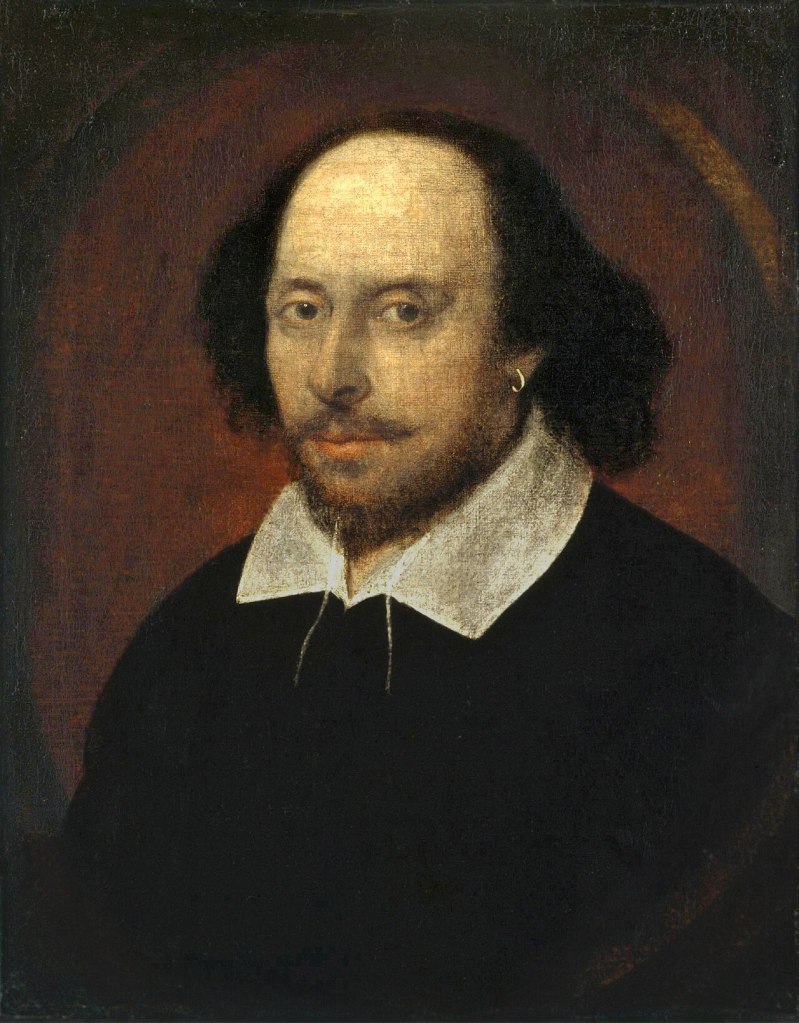
There is no one within The Western Canon who is better able to portrait this than William Shakespeare. He is at the centre of the canon and it is on his broad shoulders we should stand a proud and grateful people. No institution, no office, no ideology, and certainly no thinker has been able to assimilate the tradition before themselves more fully, while influencing the tradition after them more substantially than Shakespeare. He is the embodiment of what a, or our, canon is.
It is with him we must wrestle if we seek to distinguish ourselves as artists of letters. Joyce knew this, hence he attained literary immortality. So did Tolstoy, although his was a rebellion, yet a fierce wrestling match nonetheless. Dickinson, Proust, Whitman, Kafka, Beckett, George Elliot, Austen, McCarthy, among many other of our greatest authors have wrestled and wrestled with our canon too, achieving absolute and unequivocal canonization.
Unfortunately, the modern scholar and reader does not dare enter in an intellectual battle with Shakespeare (I.e.: with our canon) resulting in the tragic circumstance; as Bloom rather ironically points out, that the attempt to “expand” the canon in the name of “social harmony” and remembering past historical injustice, has resulted in the slow, accumulative destruction of the canon.
And ultimately the destruction of our self.

 Paradiso
Leave a comment